
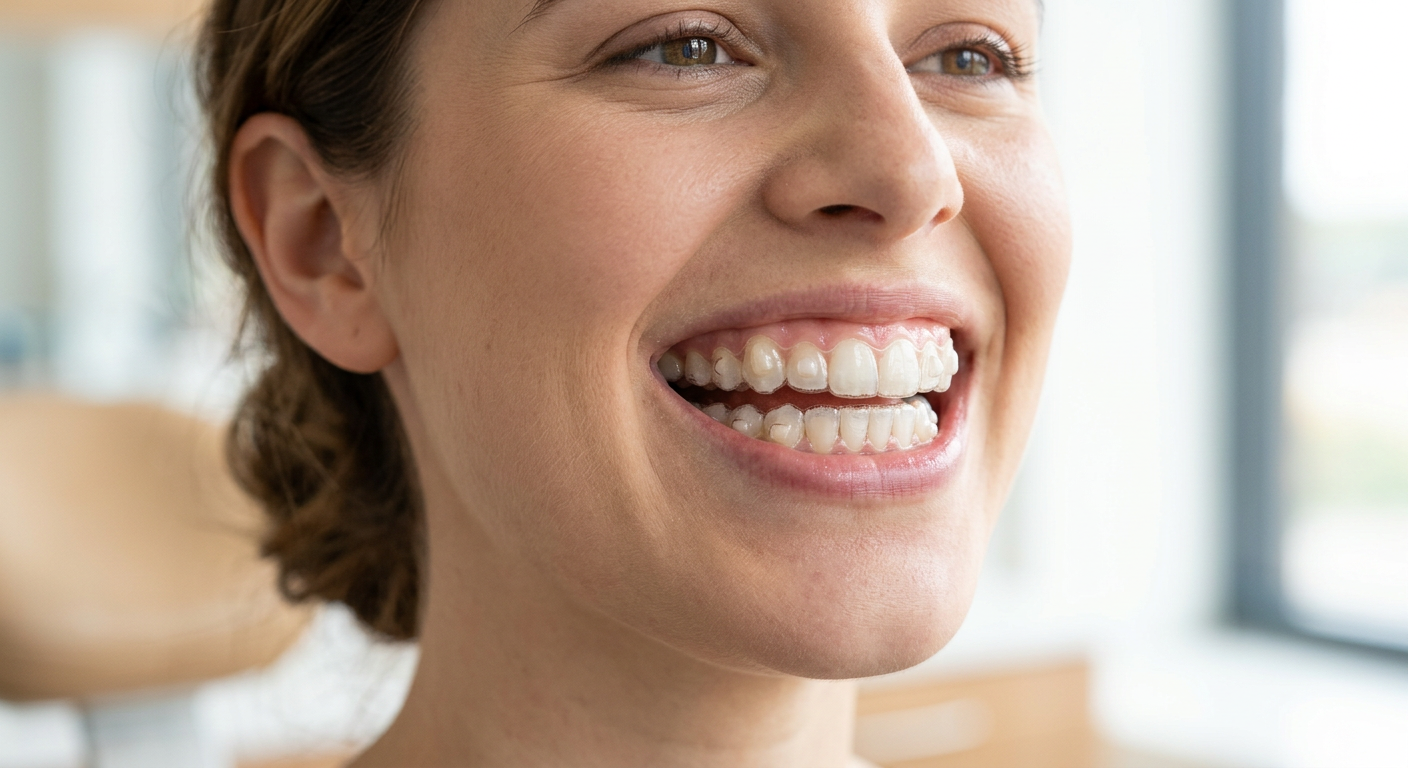
Starting the journey toward a straighter smile with OrthoAlign aligners is an exciting decision, but it often feels like entering a brave new world of dental vocabulary. You have finally committed to the process, only to realize there is a bit more hardware involved than just clear plastic trays. If you ask me, understanding these extra components is the secret sauce to finishing your treatment on time and with the results you actually want. It is not just about popping the trays in and hoping for the best; it is about working with the system.
Quick Summary
OrthoAlign aligners are a clear, removable orthodontic solution that uses custom-molded trays to shift teeth. Success depends on following a precise protocol involving attachments for grip, elastic bands for bite correction, and consistent tray wear. These tools collectively manage complex tooth movements that plastic alone simply cannot handle.
- Attachments provide necessary leverage for specific tooth movements.
- Rubber bands fix bite issues like overbites or underbites.
- Strict oral hygiene routines are essential to prevent staining or decay.
- Chewies ensure a tight, accurate fit for every tray.
Table of Contents
- Quick Summary
- Mastering OrthoAlign Attachments
- The Role of OrthoAlign Rubber Bands
- Optimizing Fit With OrthoAlign Chewies
- Daily Habits to Clean OrthoAlign Trays
- FAQ
- Recommended Reads
Mastering OrthoAlign Attachments
Think of attachments as tiny, tooth-colored handles bonded to your teeth. Without them, the smooth surface of your teeth might be too slippery for the trays to get a firm grip. It sounds counterintuitive, right? You want to straighten your teeth, yet the doctor is adding little bumps to them. Honestly, I believe these little anchors are the unsung heroes of the entire process.
Why are they necessary?
They give your aligners something to push against. If a tooth needs to rotate or move vertically, the tray needs an anchor point to exert the correct amount of force. Without these, the aligners might just slide over the tooth surface without actually nudging it into the desired position. You can explore how transforming orthodontic workflows helps professionals determine exactly where these attachments belong for the best outcomes.
The Role of OrthoAlign Rubber Bands
If you find out your treatment plan requires elastics, do not panic. While they might look a bit intimidating, they are essentially the heavy lifters of your orthodontic care. They exert the force needed to shift your jaw position or correct your bite—something the plastic trays alone just cannot do.
Understanding the mechanics
When you wear these, you are actively aligning your upper and lower arches. It is a bit like a pulley system in a gym. You have to be consistent, though. If you skip a day or slack off on wearing them, you are essentially hitting the pause button on your progress. It is a bit like trying to run a race while someone is holding onto your back—everything is just slower and harder than it needs to be. For those curious about the treatable cases where these bands are most common, it is worth looking at how they bridge the gap between simple crowding and complex skeletal alignment.
Optimizing Fit With OrthoAlign Chewies
Have you ever noticed a tiny air gap between your tooth and the edge of your aligner? That is where chewies come into play. These little foam cylinders are your best friends during the first few days of a new tray. You simply bite down on them, moving them around your mouth to ensure the tray is seated completely against your teeth. It is the orthodontic equivalent of making sure your phone case is snapped on all the way.
Pro-tips for usage
Use them for a few minutes every time you put your aligners back in after eating. It helps eliminate those annoying gaps, which means your teeth move faster and more predictably. Think of it as ensuring the engine is fully engaged; if it isn’t seated right, you aren’t moving anywhere.
Daily Habits to Clean OrthoAlign Trays
Let’s get real about maintenance. You are wearing these things for 22 hours a day, so they will collect bacteria. If you don’t clean them, they will start to smell—and nobody wants that. Developing a service policy for your own oral hygiene is just as important as the clinical side of things.
Best cleaning practices
- Rinse every time you take them out.
- Use a soft-bristled toothbrush to gently scrub the trays; skip the harsh toothpaste that might scratch the plastic.
- Soak them in specialized crystals or a mild cleanser once a day to keep them crystal clear.
- Never use hot water, as it can warp the plastic.
FAQ
Do attachments hurt to put on?
Not at all. The process is painless, involving a simple bonding agent that is cured with a blue light. It feels just like getting a bracket for traditional braces.
Can I eat with the rubber bands in?
Usually, yes, but it depends on your specific plan. Most orthodontists prefer you to take everything out for meals, but ask your provider if you need to keep them in while you eat.
How long do I need to use chewies?
Most people use them for the first 48 hours of every new tray set. Once the tray feels perfectly seated, you generally do not need to use them as often.
Will the attachments stain?
They are made of a composite material similar to dental fillings. While they don’t stain as easily as natural teeth, they can absorb pigments from coffee or curry over time.