
What Is an Open Bite? Definition, Types, and Causes
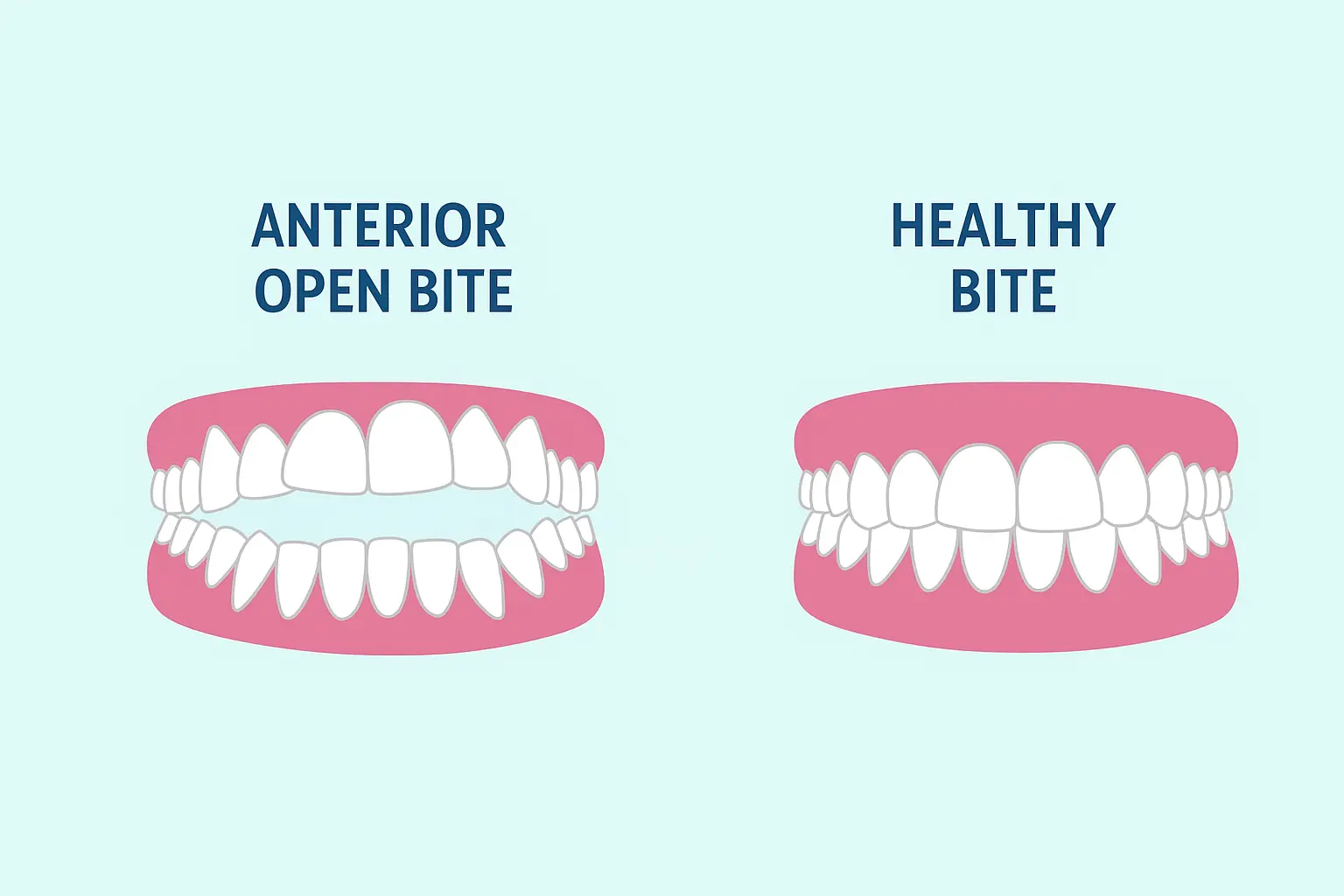
In a healthy bite, your upper and lower teeth meet evenly when your jaw is closed. An open bite is when the upper and lower teeth fail to touch, leaving a gap—even when the mouth is fully closed.
Types of Open Bite
1. Anterior Open Bite
When the front teeth do not overlap while biting down, it’s known as an anterior open bite. This gap can make biting into certain foods challenging and may also cause speech issues like a lisp.
2. Posterior Open Bite
When the back teeth fail to make contact, it’s called a posterior open bite. While the front teeth may touch, chewing can become difficult.
Why Does an Open Bite Happen?
Common causes include:
- Thumb sucking beyond early childhood
- Tongue thrusting, where the tongue pushes against the teeth during swallowing or speaking
- Prolonged pacifier use
- Genetics and jaw development patterns
Open bites are relatively rare, with prevalence ranging from 0.6% to 16.5% depending on population and region.
How to Fix an Open Bite: Treatment Methods
1. Clear Aligners
Custom-made trays that gently move teeth into proper position over time. Comfortable, discreet, and removable, clear aligners are ideal for mild to moderate open bite cases.
2. Braces
Traditional braces use brackets and wires to shift teeth into alignment. They are effective for both anterior and posterior open bites.
3. Jaw Surgery
For skeletal open bites, surgical intervention may be required, often combined with braces or aligners for optimal results.
4. TADs (Temporary Anchorage Devices)
Small titanium mini-implants used with orthodontics to help move teeth more precisely, often for anterior open bite correction.
Treatment Time: Simple open bite cases can take 8–12 months with clear aligners, but severe cases may require more time.
Open Bite Treatment with OrthoAligne Clear Aligners
At OrthoAligne Solution, our clear aligners can address open bite issues through:
- Anterior Teeth Extrusion – Using attachments to help bring the front teeth down into proper contact.
- Posterior Teeth Intrusion – Reducing the vertical height of back teeth to allow front teeth to meet properly.
Your orthodontist will create a customized plan to ensure the most effective and predictable results.
Open Bite in Children: What to Consider
When to Start Treatment
Early evaluation—around age 8—is recommended while jaw growth can still be guided.
Will It Correct Itself?
In most cases, an open bite will not resolve on its own and needs orthodontic treatment.
How Dentists Diagnose It
A combination of visual exam, X-rays, and dental history will determine the cause and best treatment approach.
Other Problems Caused by an Open Bite
If left untreated, an open bite can lead to:
- Chewing difficulties
- Speech problems like lisping
- Mouth breathing
- TMJ disorders, causing jaw pain and headaches
- Worsening misalignment over time
Final Thoughts
An open bite can impact your smile, your confidence, and your overall oral health. The good news is that modern orthodontic solutions—like OrthoAligne Clear Aligners—make treatment more comfortable and discreet than ever before.
If you suspect you or your child may have an open bite, book a consultation with OrthoAligne Solution and take the first step toward a healthy, functional, and beautiful smile.