
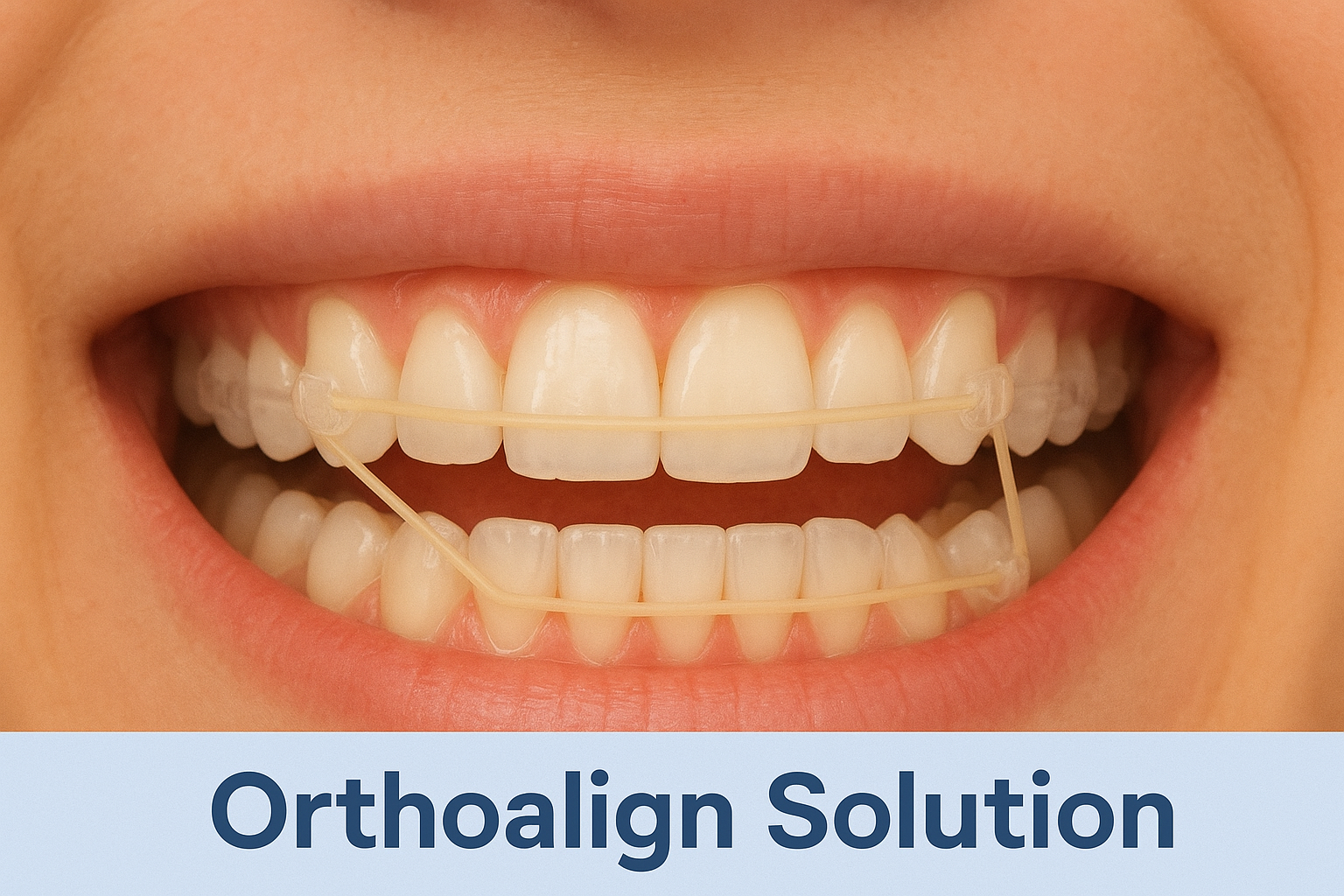
What They Are and How They Work
When you begin your clear aligner journey, your orthodontist may recommend adding elastics (rubber bands) to your treatment plan. If you’re wondering what elastics are, how they work, and whether you actually need them, you’re not alone. This article explains everything you should know about elastics in clear aligner treatments—why they’re used, how they help, and what to expect during your smile transformation.
What Are Elastics (Rubber Bands) in Orthodontics?
Elastics, also called orthodontic rubber bands, are small but powerful tools used alongside clear aligners to fix bite alignment and jaw positioning issues. While aligners are designed to move and straighten teeth, elastics provide additional force in specific directions. This helps address more complex bite concerns such as:
- Open bites
- Crossbites
- Underbites
- Jaw discrepancies (anteroposterior correction)
In short, elastics are an important add-on that can make aligner treatment more effective for patients with complicated orthodontic needs.
Do All Patients Need Elastics With Clear Aligners?
Not everyone requires elastics in their aligner treatment. The decision depends entirely on your orthodontic case. Your orthodontist may recommend elastics if:
- You have bite problems that aligners alone cannot fix
- Jaw alignment needs correction for a proper bite relationship
- Additional support is required to move specific teeth efficiently
In some cases, dentists may also recommend accessories like buttons or Temporary Anchorage Devices (TADs) to support the use of elastics.
How Do Elastics Work With Clear Aligners?
Elastics work by applying gentle but constant tension between your upper and lower teeth. This pressure guides your teeth and jaws into better alignment over time.
They are usually attached in one of two ways:
- Hooks on the aligners – Some aligners are designed with precision cuts or hooks where elastics can be placed.
- Bonded buttons on teeth – Small buttons may be fixed on certain teeth, and elastics are then hooked to them.
Depending on your case, you may need to wear elastics on one or both sides of your mouth.
How to Wear Elastics With Aligners
At first, putting on elastics may feel tricky, but with practice, it becomes second nature. A general guide is:
- Hook the elastic onto the aligner hook or button on one side.
- Secure it to the opposite side as instructed.
- Insert your aligners after attaching elastics to ensure a proper fit.
Your orthodontist will give you a custom configuration, and it’s important to follow their exact instructions for the best results.
How Long Should Elastics Be Worn?
For elastics to work effectively, they must be worn 22 hours per day, just like aligners. Only remove them when eating or drinking.
The length of time you’ll need elastics depends on your specific case. Some patients wear them for just a few months, while others may need them for most of their treatment. Consistency is key—skipping elastics can slow down or even reverse your progress.
Common Mistakes to Avoid With Elastics
Wearing elastics incorrectly can impact your results. Here are mistakes you should avoid:
- ❌ Not wearing elastics consistently – Delays treatment progress.
- ❌ Incorrect placement – Reduces their effectiveness.
- ❌ Wearing only some of your prescribed elastics – Can negatively affect tooth movement.
- ❌ Using the same elastics for too long – Replace them daily, as they lose elasticity.
Final Thoughts
Elastics are a simple but powerful tool that enhance the effectiveness of clear aligner treatments, especially for patients with bite and jaw issues. While they may take some time to get used to, wearing them as directed ensures you achieve the best possible smile.
If you’re undergoing aligner treatment and your doctor recommends elastics, embrace the process—your future smile will thank you. For more guidance or questions about clear aligners with elastics, contact OrthoAlign Solution today.